
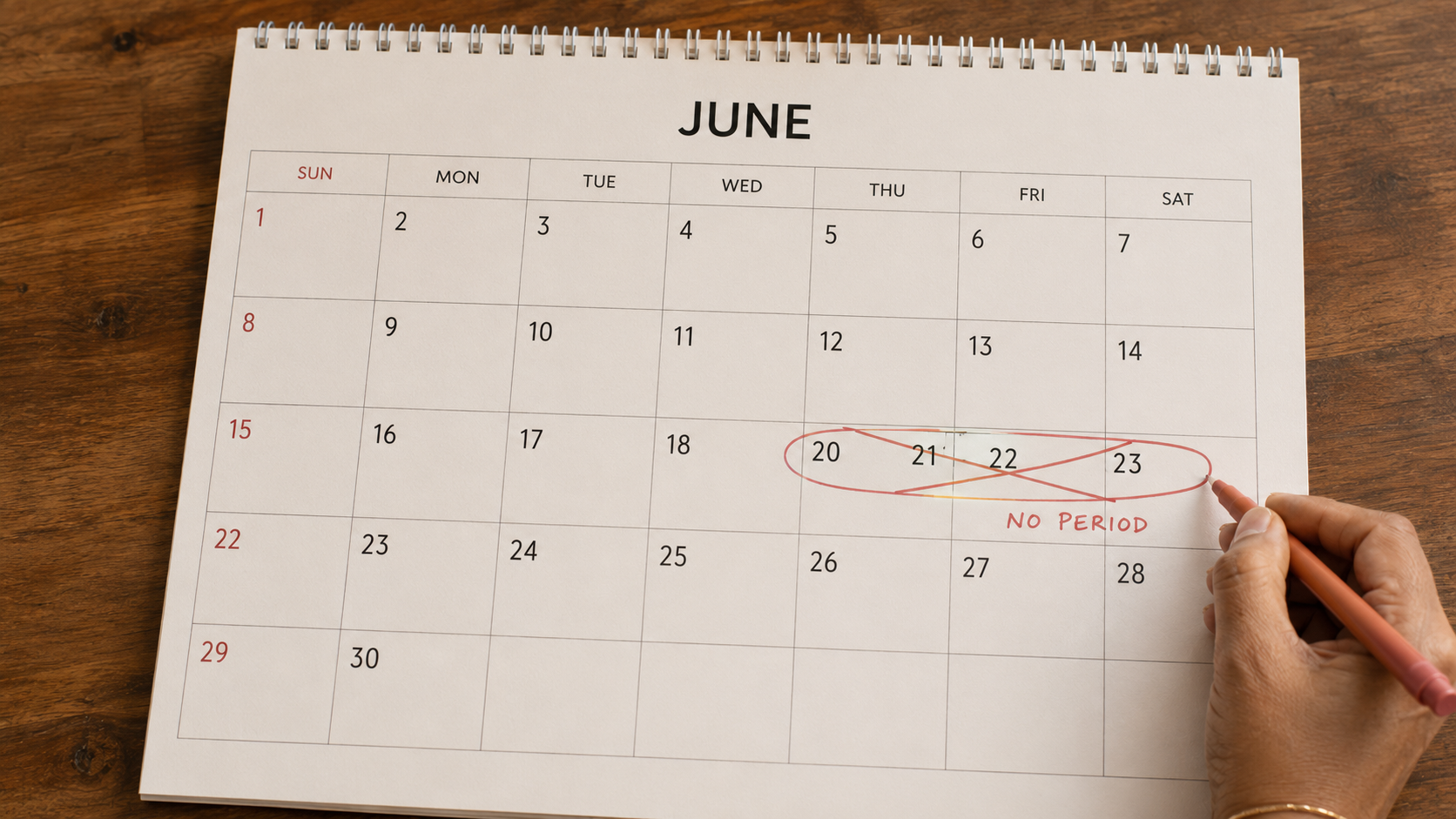
Perimenopause: When Your Body Starts Writing a New Chapter
For many women, perimenopause arrives quietly and without introduction. A period that comes a week early. A night of sweating that wakes you at 2 am. A stretch of irritability that feels disproportionate to the circumstances. None of it seems connected at first. But these experiences often are connected, by a single underlying cause: the beginning of the menopausal transition.
Perimenopause is the phase your body enters as it moves towards menopause, and for most women, it is the longest and most symptom-rich part of the entire journey. This article explains what perimenopause is, when it typically begins, what drives it biologically, and what it tends to feel like in real life.
What Is Actually Happening in Your Body
Perimenopause begins when the ovaries start producing oestrogen and progesterone less consistently than they did during the reproductive years. This does not happen in a straight line. Hormone levels do not simply decline steadily from one month to the next. Instead, they fluctuate, sometimes swinging higher than normal before dropping, then rising again unpredictably.
These hormonal swings are what drive the wide range of symptoms women experience during perimenopause. When oestrogen surges, the uterine lining may thicken, leading to heavier or more prolonged periods. When it drops, a woman may miss a period, experience a hot flush, or notice disrupted sleep. Progesterone, which is produced only after ovulation, declines in tandem with irregular ovulation, removing its calming, sleep-supporting influence from the body’s chemistry.
Alongside these changes, the brain sends increasingly strong signals to the ovaries through rising levels of follicle-stimulating hormone (FSH). The ovaries respond less predictably, and this mismatch between hormonal signalling and ovarian response is what creates the characteristic irregularity of perimenopause.
When It Begins and How Long It Lasts
Perimenopause most commonly begins in the mid-to-late forties, though some women notice the first signs in their late thirties. The duration varies widely. For most women, perimenopause lasts between four and eight years, though it can be as brief as one year or extend to more than ten.
The first reliable sign is usually a change in the menstrual cycle. Cycles may become shorter, longer, heavier, lighter, or simply less predictable than they used to be. According to the STRAW+10 framework used internationally to classify reproductive aging, a persistent difference of seven or more days in cycle length is one of the earliest clinical markers of the transition.
Given that Indian women reach menopause at an average age of around 46 to 47 years, perimenopause in India often begins in the early-to-mid forties. This is a period when many women are at the peak of family responsibilities and professional commitments, which is one reason why the symptoms of perimenopause can feel so destabilising when they are not understood in context.
Did You Know? Perimenopause can begin up to ten years before the final menstrual period, yet many women are not aware they are in it until symptoms become more obvious in the later stages of the transition.
The Symptoms Women Most Commonly Experience
The hallmark symptoms of perimenopause stem directly from fluctuating oestrogen levels. Hot flushes and night sweats, collectively called vasomotor symptoms, are among the most frequently reported. These occur because oestrogen fluctuations affect the brain’s temperature regulation centre, causing the body to perceive heat that is not there and respond with a sudden wave of warmth, flushing, and sweating.
Sleep disturbance is another very common experience, often linked to both night sweats and the declining influence of progesterone on the nervous system. Mood changes, including increased anxiety, low mood, or heightened irritability, are also widely reported, reflecting oestrogen’s broad influence on brain chemistry.
Other symptoms that women may notice during perimenopause include irregular or heavier-than-usual bleeding, breast tenderness, changes in libido, vaginal dryness, increased urinary frequency, difficulty concentrating, and fatigue. Not every woman experiences all of these. Some women sail through perimenopause with only subtle changes; others find certain symptoms significantly disruptive. Both experiences are valid and normal.
A common misconception is that heavy bleeding during perimenopause is always a sign of something serious. While it is important to discuss any significant change in bleeding with a healthcare provider, heavier periods during the early menopausal transition are often a direct result of hormonal fluctuation rather than an underlying condition. Medical evaluation is still advisable, but the cause is frequently perimenopausal in nature.
Living Through Perimenopause: What This Means Day to Day
Understanding that perimenopause is the reason behind a cluster of seemingly unrelated experiences can be genuinely reassuring. Waking at night, feeling unusually anxious before a period, or noticing that your cycle has shifted from its familiar pattern are not random events or signs that something is going wrong. They are the body navigating a transition it was always going to make.
That said, perimenopausal symptoms can affect quality of life in real and meaningful ways. Disrupted sleep affects energy, concentration, and mood. Unpredictable periods make planning difficult. Emotional changes can strain relationships or feel unfamiliar and unsettling. These are legitimate challenges, and acknowledging them without minimising them is part of approaching this phase well.
Tracking symptoms, whether through a journal or a digital tool, can be particularly helpful during perimenopause. It reveals patterns that are easy to miss in the moment: the link between a bad night’s sleep and the week before a period, or a recurring dip in mood at a particular point in the cycle. This kind of information is also valuable when speaking with a doctor, as it provides a clearer picture of what is happening than memory alone.
In India, where access to menopause-specific healthcare can be limited in some regions, and where symptoms may go unnamed or unrecognised, this self-awareness becomes even more important. A woman who understands perimenopause is better equipped to seek the right support and advocate for herself in clinical settings.
Key Takeaways
- Perimenopause is the transitional phase leading to menopause, driven by increasingly irregular oestrogen and progesterone production from the ovaries.
- It typically begins in the mid-to-late forties and lasts between four and eight years, though the timeline varies between women.
- The most common symptoms include irregular periods, hot flushes, night sweats, sleep disruption, and mood changes, though experiences differ significantly between women.
- Heavy or irregular bleeding during perimenopause is often hormonal in origin, though medical evaluation is still recommended for any significant change.
- Tracking symptoms helps women recognise patterns and have more productive conversations with their healthcare providers.
At Emvera, we believe every woman deserves the knowledge and support to better understand, accept, and embrace menopause as a natural life transition. Through personalised symptom tracking, evidence-based education, a supportive community, and a curated marketplace of trusted wellness products, Emvera helps women navigate their menopause journey with greater clarity, control, and confidence.
Perimenopause leads, eventually, to a single defining milestone. The next article, Menopause, explains exactly what that milestone means medically, how it is confirmed, what is happening in the body at that point, and what it signals about the transition that has brought you there.
References
- Harlow SD, et al. Executive summary of the Stages of Reproductive Aging Workshop + 10: addressing the unfinished agenda of staging reproductive aging. Climacteric. 2012;15(2):105-114.
- Ahuja M. Age of menopause and determinants of menopause age: A PAN India survey by IMS. Journal of Mid-life Health. 2016;7(3):126-131.
- Avis NE, et al. Duration of menopausal vasomotor symptoms over the menopause transition. JAMA Internal Medicine. 2015;175(4):531-539.
- Santoro N, Roeca C, Peters BA, Neal-Perry G. The menopause transition: signs, symptoms, and management options. Journal of Clinical Endocrinology and Metabolism. 2021;106(1):1-15.